



Pros and Cons of Central Bank Digital Currency: A Balanced Overview
In recent years, there has been a significant surge in interest regarding central bank digital currencies (CBDCs). As of 2023, around 90 central banks globally are exploring or actively developing their own digital currencies. The potential implications of CBDCs for the financial system are monumental, especially when considering that the global central bank digital currency market is projected to reach $5 billion by 2025. But what does this mean for individuals and businesses alike? To answer this, we’ll break down the central bank digital currency pros and cons that should be at the forefront of discussion.
What is Central Bank Digital Currency?
Before diving into the advantages and disadvantages, it’s essential to understand what CBDCs are. Central Bank Digital Currencies are digital forms of fiat money issued and regulated by a country’s central bank. Unlike cryptocurrencies like Bitcoin, which operate on decentralized networks, CBDCs are designed to maintain stability and trust, being backed by the government. In a world where the reliance on cash transactions is declining, CBDCs aim to create a more accessible and cost-effective payment system.
The Benefits of Central Bank Digital Currency
1. **Enhanced Financial Inclusion**: One of the most significant benefits of CBDCs is their potential to promote financial inclusion. According to a report from the World Bank, approximately 1.7 billion adults worldwide remain unbanked. CBDCs could provide a digital alternative to traditional banking, allowing individuals in remote areas to access financial services easily.
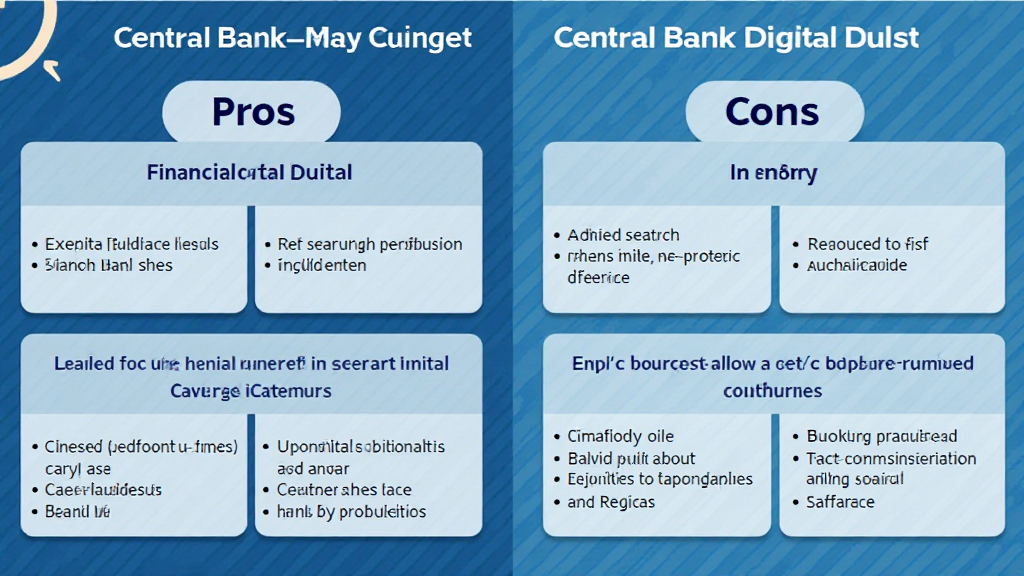
2. **Reduced Transaction Costs**: Implementing a CBDC can lead to lower transaction costs for businesses and individuals. Payments could be made almost instantly and involve minimal fees compared to current systems reliant on third-party intermediaries.
3. **Increased Monetary Policy Efficacy**: CBDCs could enhance the effectiveness of monetary policy. Central banks could directly influence the economy by adjusting interest rates on digital currency holdings, which would alter spending habits and stimulate economic activity.
4. **Improved Payment Systems**: A CBDC can modernize payment systems, making transactions faster and safer. Digital currencies can be programmed for automatic execution, reducing the potential for human error.
5. **Fight Against Fraud and Money Laundering**: With a transparent and traceable digital system, CBDCs can help in combating fraud and illicit financial activities. Governments would have a complete view of transactions, making it difficult for malicious actors to exploit the system.
6. **Response to Cryptocurrency Competition**: As cryptocurrencies gain popularity, central banks face pressure to adapt. Issuing a CBDC can help maintain the stability of national currencies and reduce the risk associated with private cryptocurrencies.
The Drawbacks of Central Bank Digital Currency
While the benefits are compelling, there are also significant challenges and disadvantages associated with CBDCs.
1. **Privacy Concerns**: One of the major drawbacks of CBDCs is the potential lack of privacy. Every transaction conducted using CBDCs could be tracked by the central bank, leading to concerns about government surveillance and data privacy.
2. **Risk of Bank Runs**: If a CBDC provides an easier way to hold money than commercial banks do, it could lead to sudden withdrawals from banks during times of uncertainty. This might destabilize the banking sector and require additional regulations.
3. **Cybersecurity Threats**: The introduction of CBDCs also introduces new cybersecurity risks. Central banks will need to invest significantly in security measures to protect against potential cyberattacks targeting digital currencies.
4. **Potential for Reduced Credit Creation**: By providing citizens with direct access to state money, CBDCs may decrease the deposit base for commercial banks, impacting their ability to create credit, which is crucial for economic growth.
5. **Implementation Costs**: The technology and infrastructure required to launch a CBDC can be expensive. Central banks will need to allocate resources to ensure a robust system is in place before any launch.
6. **Regulatory Challenges**: The swift adoption of CBDCs would necessitate an overhaul of current regulations governing currency and payment systems. This reformation can be complex and time-consuming, affecting the speed of implementation.
Local Considerations: The Case of Vietnam
The relevance of CBDCs in Vietnam cannot be understated. As of 2021, Vietnam had a 70% internet penetration rate and a booming e-commerce sector worth over USD 12 billion. The government’s exploration of a digital currency could capitalize on these trends, providing the unbanked population with access to financial services.
Recent statistics show that Vietnam’s mobile payment transactions have increased by 170% over the past two years. This surge highlights the demand for more efficient payment solutions, positioning CBDCs as a viable option for enhancing the Vietnamese economy.
Conclusion: Is CBDC the Future?
As we examine the central bank digital currency pros and cons, it’s clear that CBDCs represent a profound shift in how we think about money and transactions. Their potential benefits, such as enhanced financial inclusion and improved monetary policy effectiveness, make CBDCs an enticing prospect. However, privacy concerns, cybersecurity threats, and implementation costs cannot be overlooked.
In regions such as Vietnam, where the population is increasingly adopting digital solutions, the introduction of a CBDC could pave the way for a more secure and inclusive financial environment. Yet, as always, careful consideration of the risks involved is paramount. In the ever-evolving landscape of digital currencies, stakeholders must balance innovation with safety.
As we move closer to a digital future, the question remains: will central bank digital currencies redefine our existing financial ecosystems, or will their drawbacks prove too daunting to overcome?
In conclusion, while the journey of CBDC is just beginning, it has immense potential to shape the financial landscape in the coming years. For further insights, check out hibt.com for more discussions on the impacts of digital currencies.
Not financial advice. Consult local regulators before making any financial decisions.


